
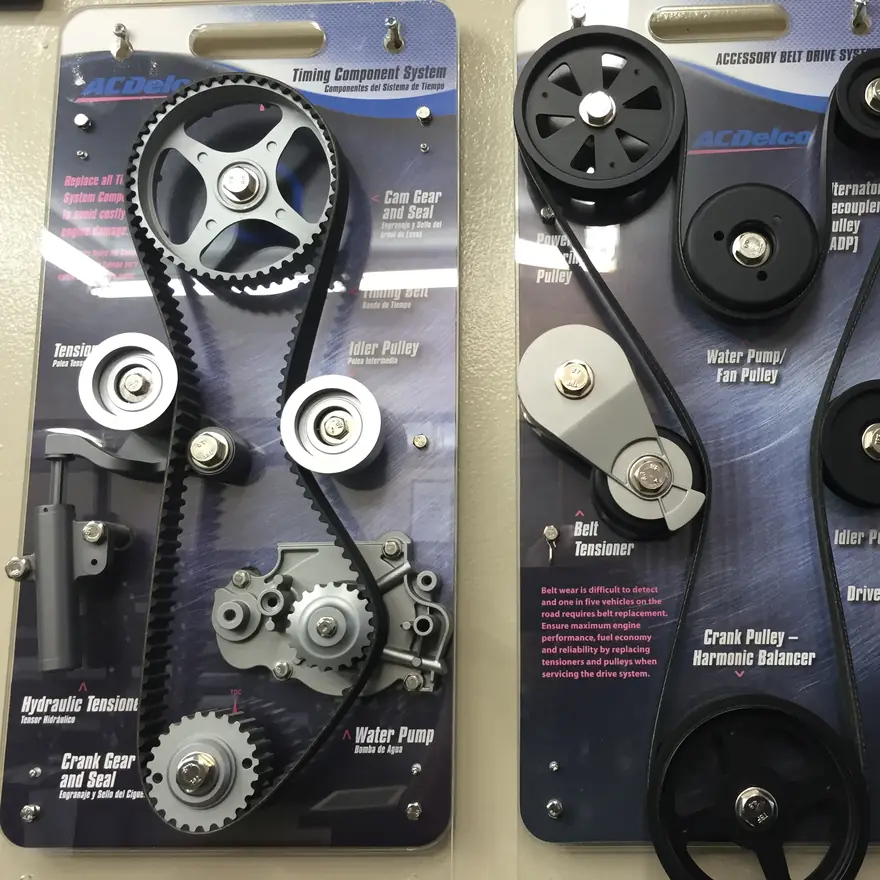
How important is your timing belt?
It’s a simple part that needs to be replaced long before it fails. The timing belt keeps the valves and pistons in your engine moving in step. If it breaks, the engine stops at once, and on many engines the damage costs many times more than replacing the belt on schedule would have.
The low-mileage trap
Here’s what catches a lot of careful owners. A timing belt is rubber, and rubber ages whether the car is driven or not. That’s why the factory schedule gives two limits, a mileage and a number of years, and the belt is due at whichever comes first.
Plenty of cars in Edmonds are older, well kept and driven lightly. A ten-year-old car with 45,000 miles can be overdue for a timing belt even though the odometer says it has years to go. The same goes for a used car that came without service records. If you can’t prove the belt was done, it’s safest to assume it wasn’t.
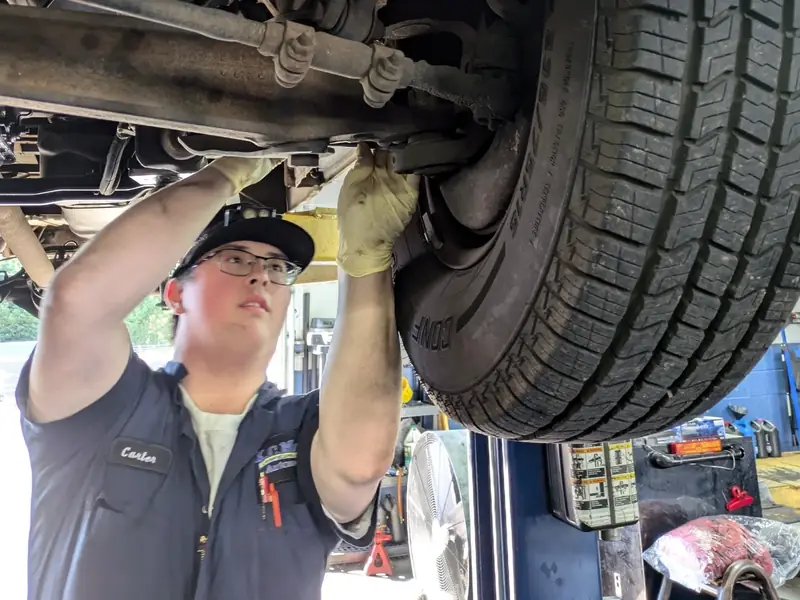

What we do
- Look up whether your engine has a timing belt or a chain. Chains usually last much longer.
- Research the factory replacement schedule for your engine.
- Inspect the belt and listen to it before recommending anything.
- Replace the belt, and offer the other parts that sit behind the same covers: the water pump, tensioner and idler pulleys.
Most of the cost of this job is labor, since a good part of the engine has to come apart to reach the belt. Doing those related parts at the same time saves you from paying for that labor twice.
If you’re overdue
Don’t put it off. Call (425) 778-1177 or book online. The full rundown is on our main timing belt replacement page.