

How your car’s heater works
Your heater doesn’t make its own heat. It borrows it from the engine. Hot coolant flows through a small radiator behind the dashboard called the heater core, and the blower fan pushes air across it and into the cabin. So when the heat quits, the trouble is usually in one of three places: the coolant isn’t getting hot, it isn’t reaching the heater core, or the air isn’t being pushed or directed the way it should be.
Signs your heating system needs service
- Cold air with the temperature turned all the way up
- Heat that takes a long time to arrive, or a temperature gauge that stays low
- A sweet smell in the cabin or a greasy film on the inside of the windshield
- Damp carpet on the passenger side
- A windshield that won’t defog
- A fan that only works on some speeds, or not at all
- Heat on one side of the car and not the other

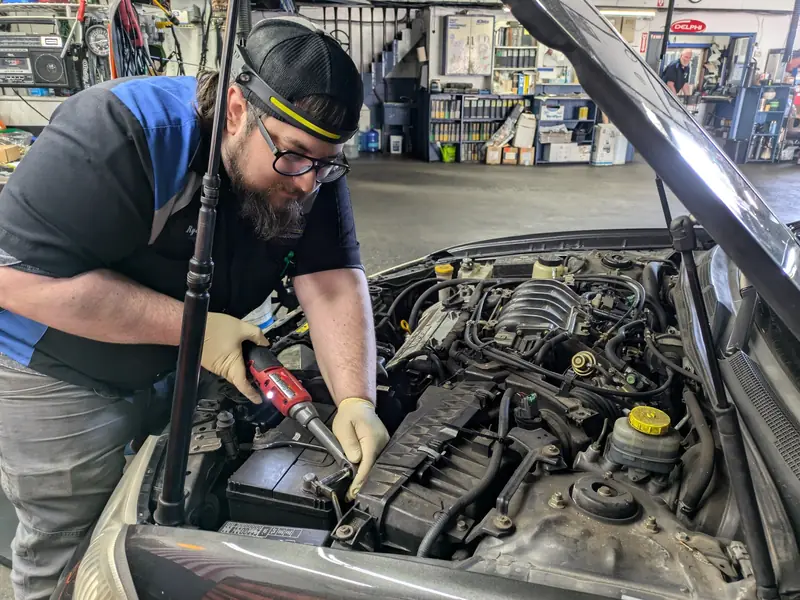
What we check and repair
- Coolant level and leaks. Low coolant is the most common reason for no heat, and it can lead to overheating.
- Thermostats. One that’s stuck open keeps the engine from ever warming up fully.
- Heater cores and heater hoses. Clogged cores get flushed or replaced. Leaking ones get replaced.
- Blower motors and resistors. The usual cause of a fan that works on high only.
- Blend doors and controls. The parts that decide where the air goes and how warm it is.
- Water pumps. A weak pump can’t move enough coolant to heat the cabin.
Why it shouldn’t wait
A heater problem is a comfort problem until the first frosty morning, when it becomes a visibility problem. And because the heater runs on engine coolant, no heat can be an early warning that the cooling system is low or leaking. Catching that early protects the engine. If we find the problem is on that side, our cooling system page covers what’s involved. For the other half of your climate control, see air conditioning repair.
Call us or book online and tell us what it’s doing.