
The miles arrive faster than you think
Drive a typical commute and you’ll put 12,000 to 15,000 miles a year on your car. At that pace a vehicle reaches timing belt mileage in six or seven years, often right as the last payment clears. It’s an easy service to miss, and the one you least want to.
How important is your timing belt?
It’s a simple part that needs to be replaced long before it fails. If a timing belt breaks, the repair costs many times more than replacing it on schedule, and on many engines it can ruin the engine outright. There’s rarely any warning first.

Does your vehicle even have one?
Maybe not. Many newer engines use a timing chain, which usually lasts far longer. Others, including some popular V6 engines in minivans and three-row SUVs, still use a belt. We’ll look up your exact engine and the factory schedule, so you know for certain.
Do it once, do it completely
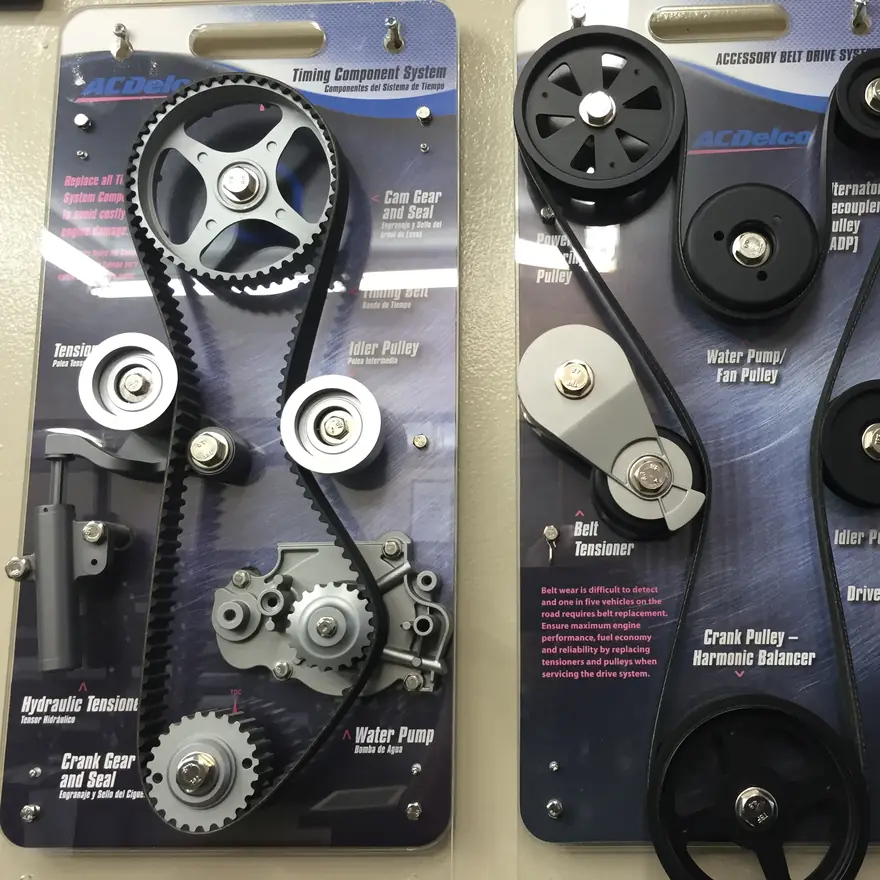
Reaching the timing belt means taking apart a good part of the front of the engine. While we’re in there, we offer the preventive replacements that share that labor:
- Water pump
- Belt tensioner and idler pulleys
- Front engine seals, if they’re seeping
- The drive belt that runs your accessories
It can save you time and money, and keeps you ahead of the next problem. Since most timing belts fall due around the same time as the 90K service, it often makes sense to do them in one visit.
If you’re overdue, get it done
Whether you know much about your timing belt or not, our technicians will take a close look and listen before recommending anything. Call (425) 778-1177, or read more on our main timing belt replacement page.