
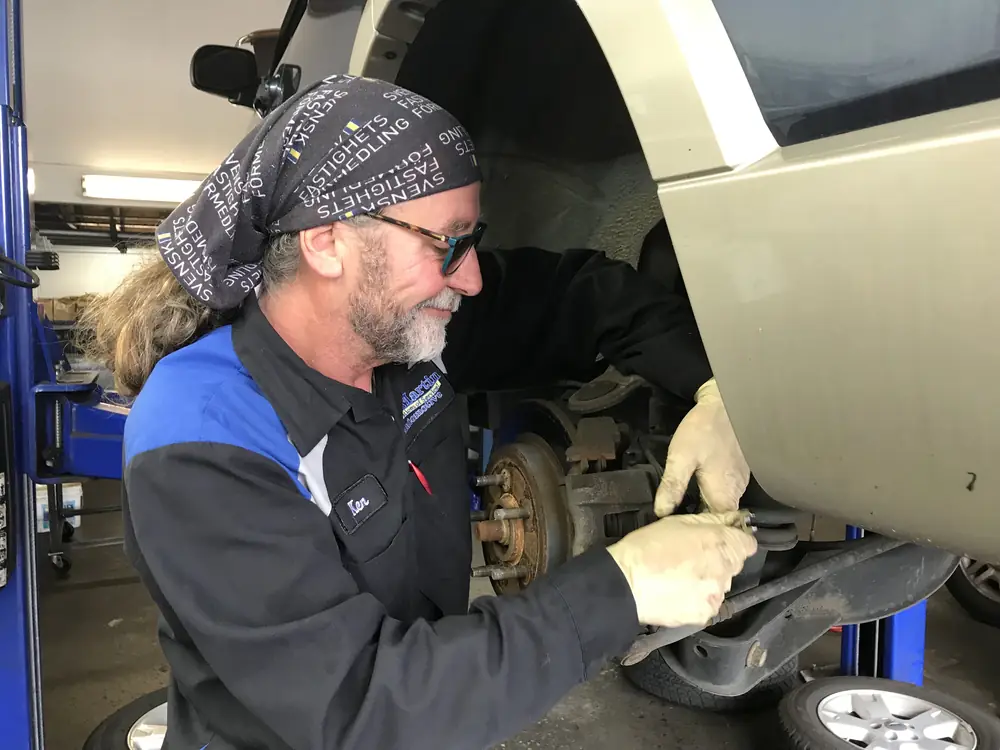
Hills wear brakes faster
Every trip down toward the water is a long, steady brake application. Do that daily and your pads and rotors live a harder life than the same parts on a car that spends its days on flat roads. The longevity of brake pads really varies: some cars get 50,000 miles from a set, and others go through them in as little as 10,000.
So the mileage on the box doesn’t tell you much. Having them measured does.
What we look at in a brake check
- Pad thickness, front and rear
- Rotors, for scoring, heat spots and warping
- Calipers and hardware, which can seize and wear one pad faster than the other
- Brake lines and hoses
- Brake fluid. It absorbs moisture from the air over time, which is why most makers want it exchanged every few years
These checks are part of the routine look we give your car whenever it’s here, for any service.
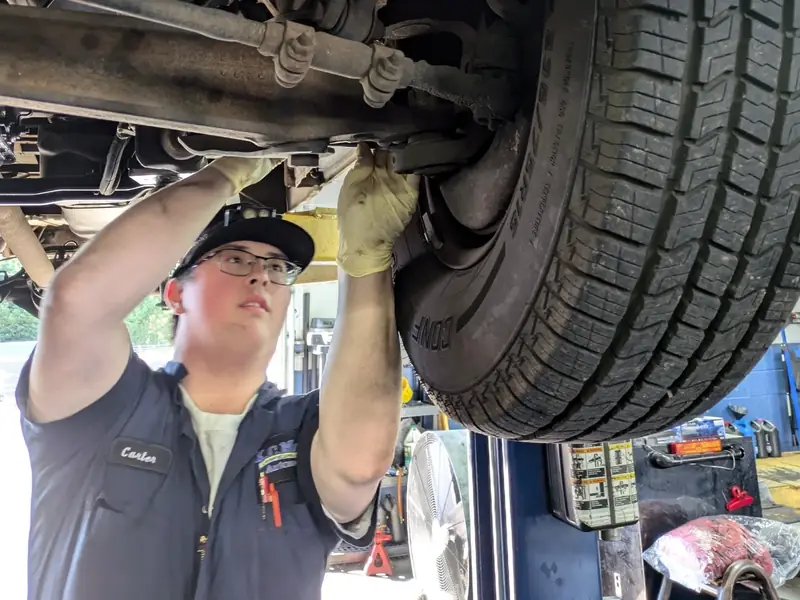

When to come in sooner
- Squealing or screeching when you stop
- Grinding
- A pedal that feels soft or sinks
- A shake in the pedal or the steering wheel, especially on a downhill stop
- A hot smell after a long descent
- More than 20,000 miles since your last brake inspection
The rule that saves money
Replace brake pads long before they wear out. Pads are inexpensive. The rotors and calipers they destroy when they’re gone are not. When other parts do need work, whether that’s discs, drums, rotors or the hydraulic system, we diagnose it and handle the complete job.
More detail is on our main brake repair page, and our post on the 7 signs you may need brake repair explains what each warning means.