Hills and curbs
Parking on a slope usually means turning the wheels toward the curb, and in a town built on hills that happens a lot. Rolling into that curb a little too firmly, or bumping it while parallel parking on a grade, is one of the most common ways an alignment gets knocked out. So is the jolt at the bottom of a steep driveway.
None of these feel like much at the time. The change usually shows up weeks later, as a steering wheel that sits slightly off-center or a tire that’s wearing on one edge.
Normal drift, or a real pull?
Most roads are built higher in the middle so rain runs off, and a car will drift a little toward the low side. That’s normal. A real alignment problem feels different:
- You have to hold the wheel to keep the car going straight
- The steering wheel is turned while the car is going straight
- One edge of a tire is wearing faster than the rest
- The car pulls the same way on every road
- It feels different after you’ve hit something
Towing and hauling
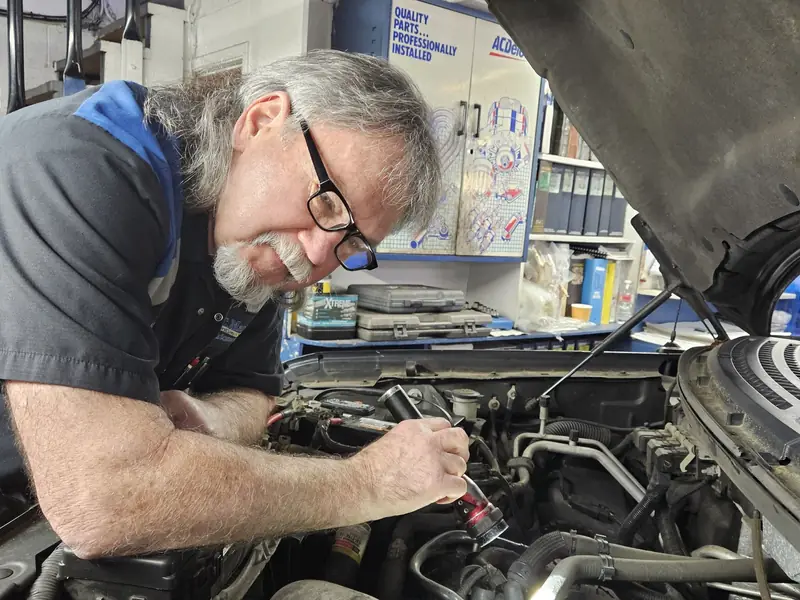
A truck or SUV that pulls a boat or carries heavy loads works its steering and suspension parts harder. Worn parts let the alignment wander, and they keep a new alignment from holding. If we find one, we’ll show you before going any further.
What we do
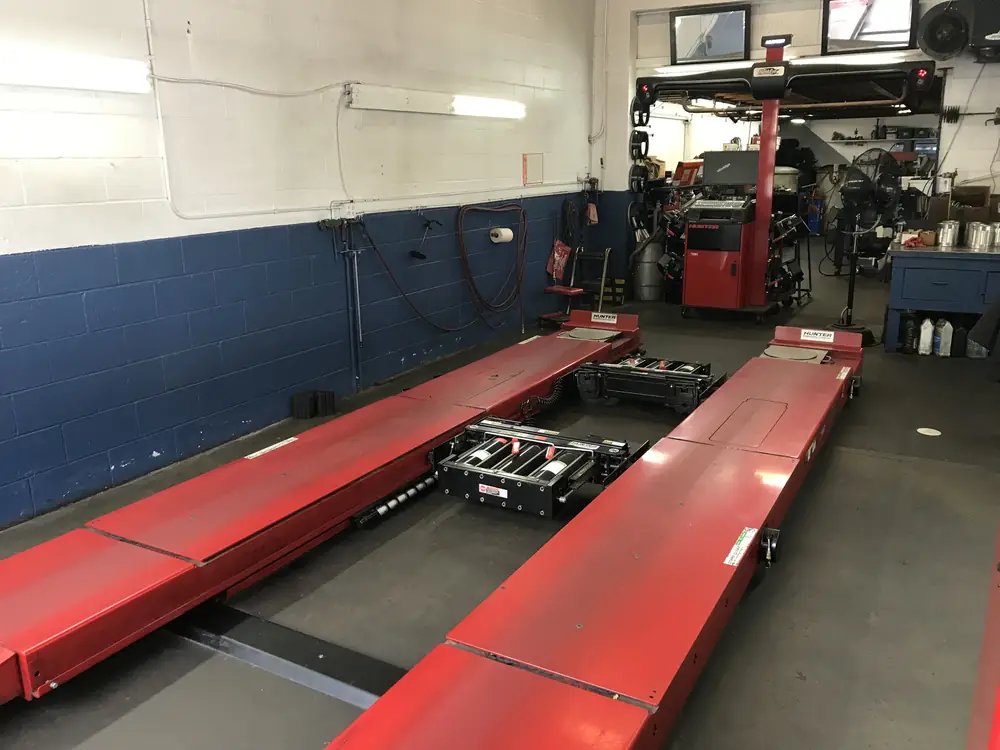
We check tire pressure and tire wear, then measure your current alignment with proper equipment. The readings tell us exactly what to adjust: camber, caster and toe, the three angles that decide how each wheel meets the road. We set them back to the manufacturer’s specifications, then road test the car to make sure it’s right.
We don’t sell tires, so we have no reason to tell you yours are finished. We’d rather help the set you have last.
Read more on our main wheel alignment page, or see what else a pothole can damage in the danger of potholes. If the car clunks or bounces too, suspension repair is the next stop.