
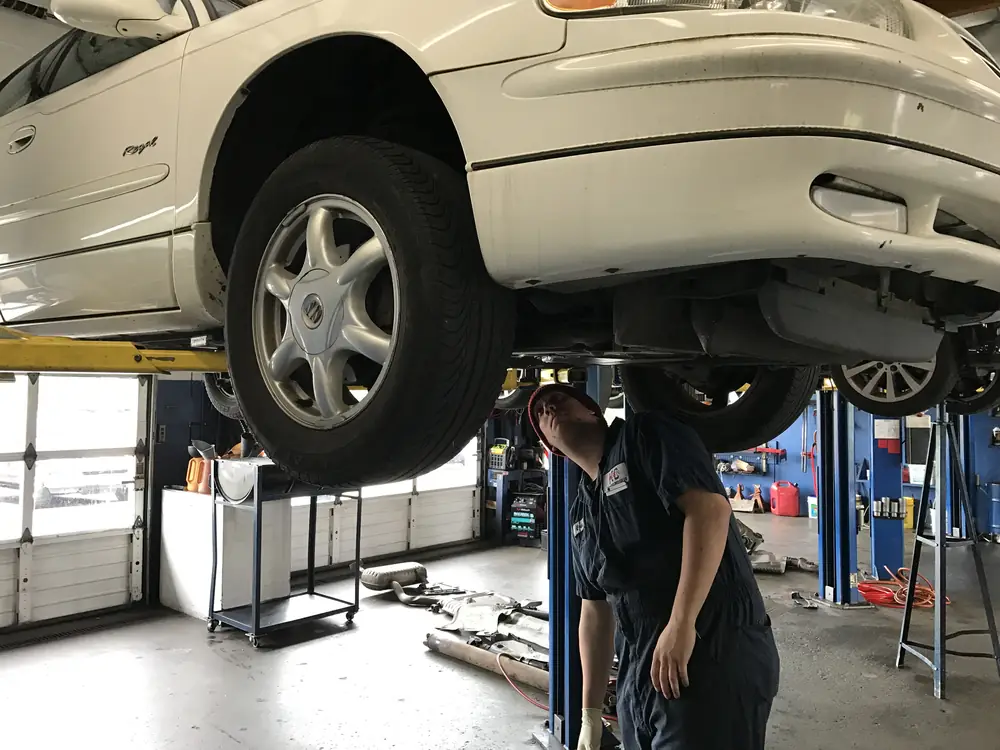
Steep driveways and low exhausts don’t mix
Mukilteo has plenty of steep driveways and sharp dips where a street meets a hill. That scrape you hear on the way in or out is usually the exhaust: a pipe, a hanger or the bottom of the muffler meeting the pavement. One hit rarely does much. A few years of them can crack a joint, bend a pipe or tear a hanger loose, and then things start to rattle and sag.
If you’ve been scraping, have us put the car on the lift and look. A bent pipe or a broken hanger is a much smaller repair than the muffler it eventually takes with it.
The hill tells you first
An exhaust leak is loudest when the engine is working hard. So the climb up from the waterfront, or up the Speedway, is often where you first hear it: a deeper rumble, a puffing or ticking sound, or a buzz under the floor that wasn’t there before.

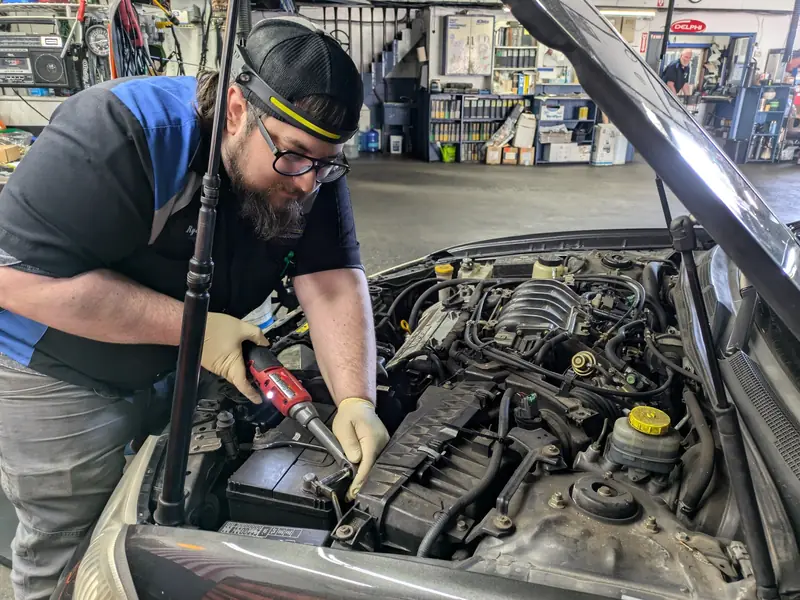
Salt air finishes the job
Near the water, rust gets a head start on everything under the car. Clamps, hangers and the seams of the muffler usually go first. We’ll show you what’s sound, what’s getting thin and what has rusted through.
Signs it’s time
- A rumble that gets louder as you accelerate
- A rattle or buzz under the floor
- A pipe or muffler hanging lower than it should
- More smoke than usual from the tailpipe
- An exhaust smell inside the car. Don’t wait on that one. It’s a safety issue
What we do
We put the car on the lift and inspect the whole system, front to back:
- Mufflers and resonators
- Pipes, flex pipes, clamps and hangers
- Gaskets and exhaust manifolds
- Heat shields
- Oxygen sensors and catalytic converters
Sometimes a muffler can be repaired, or was never installed properly to begin with. More often one that has rusted through needs replacing, and we’re an affordable place to have that done.
More on how it all works is on our main muffler and exhaust page and in our post on exhaust system basics.