Alignment matters more on all-wheel drive
Many of the vehicles in Mill Creek driveways are all-wheel drive, and those systems expect all four tires to be very nearly the same size. When a bad alignment wears one tire faster than the others, you can end up replacing the whole set early instead of one or two. A properly aligned car wears its tires evenly, and that keeps your options open.
We don’t sell tires, so our only interest is in making yours last.
Signs you need an alignment
- The vehicle pulls to one side
- The steering wheel isn’t centered on a straight road
- Uneven wear across a tire, or from one tire to the next
- A steering wheel that doesn’t return to center smoothly after a turn
- Lane-keeping that seems to nudge you more than it used to
You should also have it checked after a hard pothole or curb hit, after any suspension or steering repair, and roughly every six months to a year as routine.

Our process
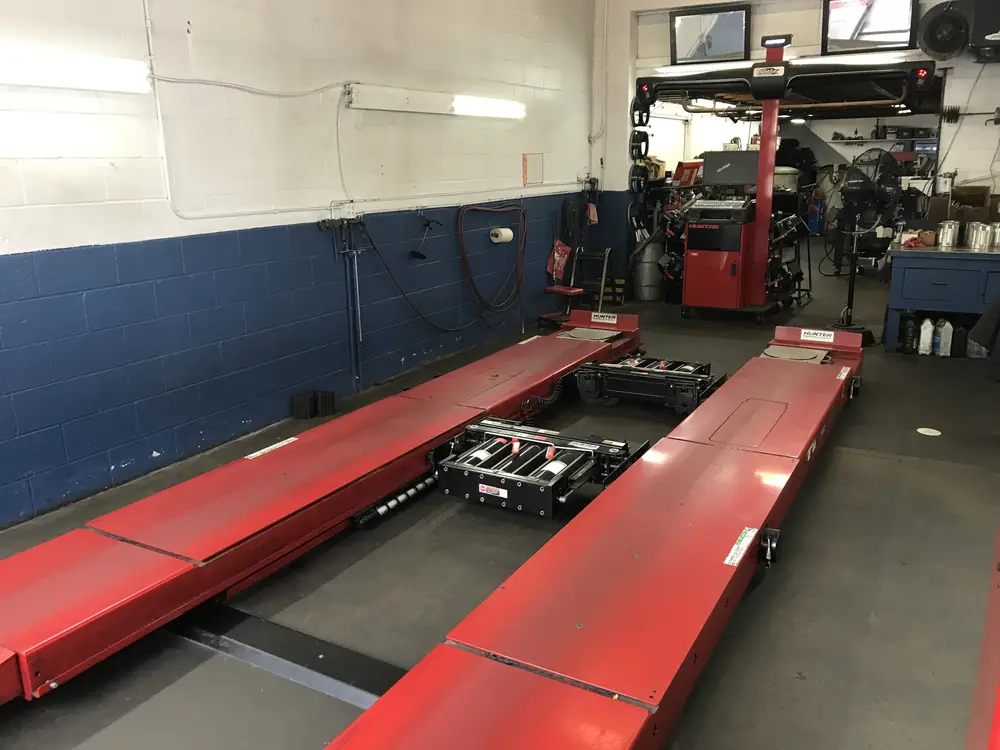
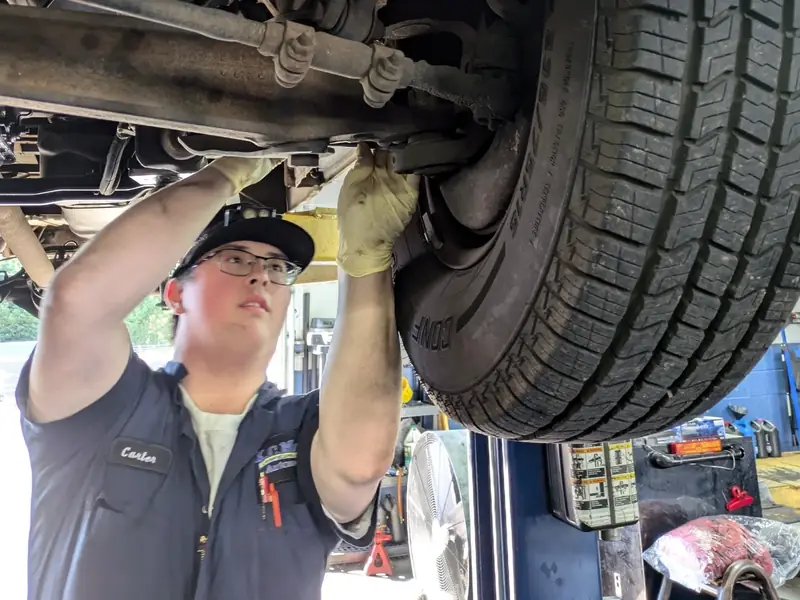
We make sure to check tire pressure, check tire wear and inspect your current alignment with proper testing. The readings let us know exactly what to adjust when it comes to camber, caster and toe. We bring them back to manufacturer specifications.
Getting the wheels pointing in a straight line reduces resistance, vibration and irregular tire wear, and that helps your fuel economy too.
We road test every one
We always road test your wheel alignment to make sure we’ve got it right. While the car is here we check tire pressures and take a quick look at the brakes. And if we find a worn steering or suspension part that would keep the alignment from holding, we’ll show you before going any further.
Learn more on our main wheel alignment page.