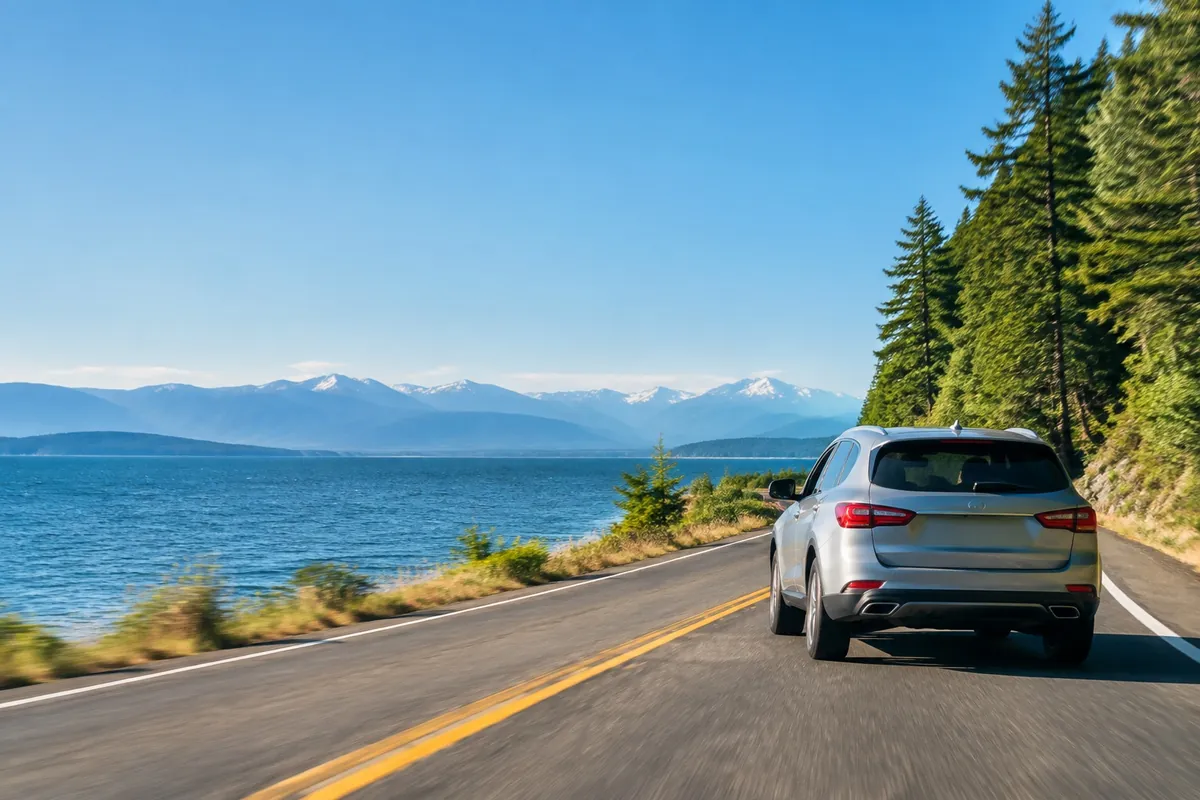
Summer is here! Road trips, ferry lines, weekends at the lake. With gas prices where they are, it’s worth a few minutes to make sure your car isn’t burning more fuel than it has to.
For this post, we’re going to assume that your car or truck is in good working order and doesn’t need any repairs to run its best. Even then, there are still ways to be smart and save money in the summer months. Here are four solid tips and good habits to make sure you’re using your fuel wisely this summer, and every summer to come.
1. Check your speed
At higher speeds, your vehicle has to push through a lot more air resistance, and that takes fuel. Every vehicle has its own sweet spot, but the U.S. Department of Energy notes that gas mileage usually drops off quickly once you go much above 50 mph.
So if it isn’t necessary to go faster (and it rarely is), slow down and save the money. Cruise control helps on the open highway, because it keeps you from creeping up without noticing. Most cars now show your current miles per gallon on the dash, and watching that number for a week is a good way to see what your own habits cost. Keeping your speed down has the added benefit of being safer.
2. Use your air conditioning wisely
Your car’s air conditioning burns fuel. In hot summer temperatures you’ll most likely be glad to stay cool and forget the expense, and we get it. But since A/C can cut your gas mileage by as much as 25 percent in very hot weather, it’s a good idea to limit it when and where you can. Turning it down helps. So does using the recirculate setting once the cabin has cooled, so the system isn’t working to cool hot outside air.
Some people will tell you to simply roll down the windows instead, but that isn’t always sound advice. At highway speeds, the drag from open windows can cancel out the savings from turning off the A/C. Around town, windows are fine. You can also make a habit of parking in the shade, so the car doesn’t have to work as hard to cool down when it’s time to drive.
3. Avoid idling when you can
Idling can use a quarter to a half gallon of gas per hour, and it’s even worse with the A/C on. That’s why so many newer cars shut the engine off by themselves at a stoplight. If yours doesn’t, and you’re going to be waiting more than a minute or so, turn off the engine.
The same goes for remote start. It’s tempting to cool the car down for ten minutes before you get in, but the air conditioning works faster and better once you’re moving.
4. Don’t overload your vehicle
Take any extra weight out of your vehicle before you go anywhere. It’s estimated that each extra 100 pounds can reduce your fuel economy by about 1 percent. Roof boxes and racks cost even more, because they add drag as well as weight, so take them off when the trip is over.
Keep up with the basics
Along with these tips, keep doing the things you should be doing year-round. Keep your tires at the pressure listed on the sticker inside the driver’s door. A clean air filter, fresh oil and an A/C system that’s fully charged all help your engine do less work. If your air conditioning takes a long time to cool the car, it may be low on refrigerant, and our car A/C repair page explains what we check.
If you live in Lynnwood, Edmonds, Mill Creek or anywhere nearby, KC Martin is here to help. If you’ve got questions about your car, we’ve got answers. We’d love to see you, and thanks for reading our Auto Repair Tips Blog!